Az Egyesült Államokban szervezett Pictures of the Year International pályázaton Radisics Milán bekerült a legjobbak közé.
A 40 fotóból álló sorozat az Environmental Vision kategóriában versenyez, ahová a környezettel és rá irányuló hatásokkal kapcsolatos nagyobb lélegzetvételű projekttel lehetett nevezni. Milán idén a Water.Shapes.Earth sorozatát küldte a rangos megmérettetésre. Az első 10 fotó az alumínium feldolgozás és a vörösiszap tárolásának témakörét járja körbe. A második 10 kép az Art of Pollution sorozat, ami az idei Magyar Sajtófotó Pályázaton második díjat ért el, és az emberi szennyezést hivatott prezentálni művészi formában. A harmadik válogatás a Rothko Hommage címet viseli, amely a sólepárlók sokszínűségével foglalkozik, a modern festészet egyik kiemelkedő alakjának, Mark Rothko munkái által inspirálva. Az utolsó 10 fotó pedig az emberi lenyomatot és a szárazságot vizsgálja. A légi perspektíva, azon belül az ortogonális nézőpont teljes mértékben megváltoztatja a látványt. Az eltűnő horizont zavarba ejti és elgondolkodtatja a nézőt, és remélhetőleg cselekvésre készteti. Az absztrakció és a dokumentum, mikro és makro határán mozgó képek megmutatják a táj igazi karakterét, és felfedik az emberi tevékenység lenyomatát. A projekt új fénybe helyezi a fotózást és környezetről alkotott képünket. Radisics Milán, a vizuális történetek krealásában kombinálja a képzőművészetet és a zsurnalisztikát. Képeivel folyamatosan kutatja az ember és a természet kapcsolatát és azok hatását a környezetre, akár a földről akár a levegőből.
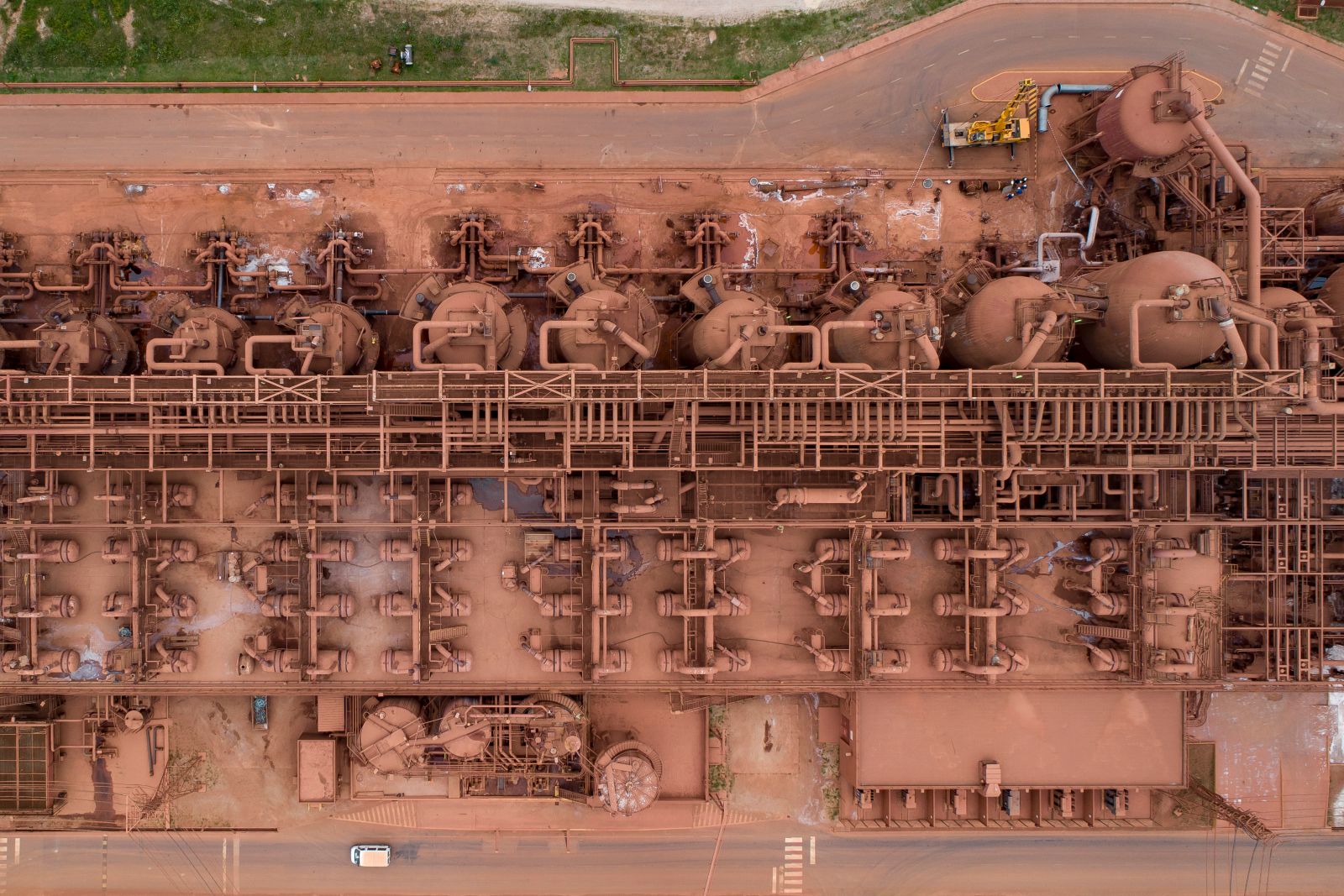
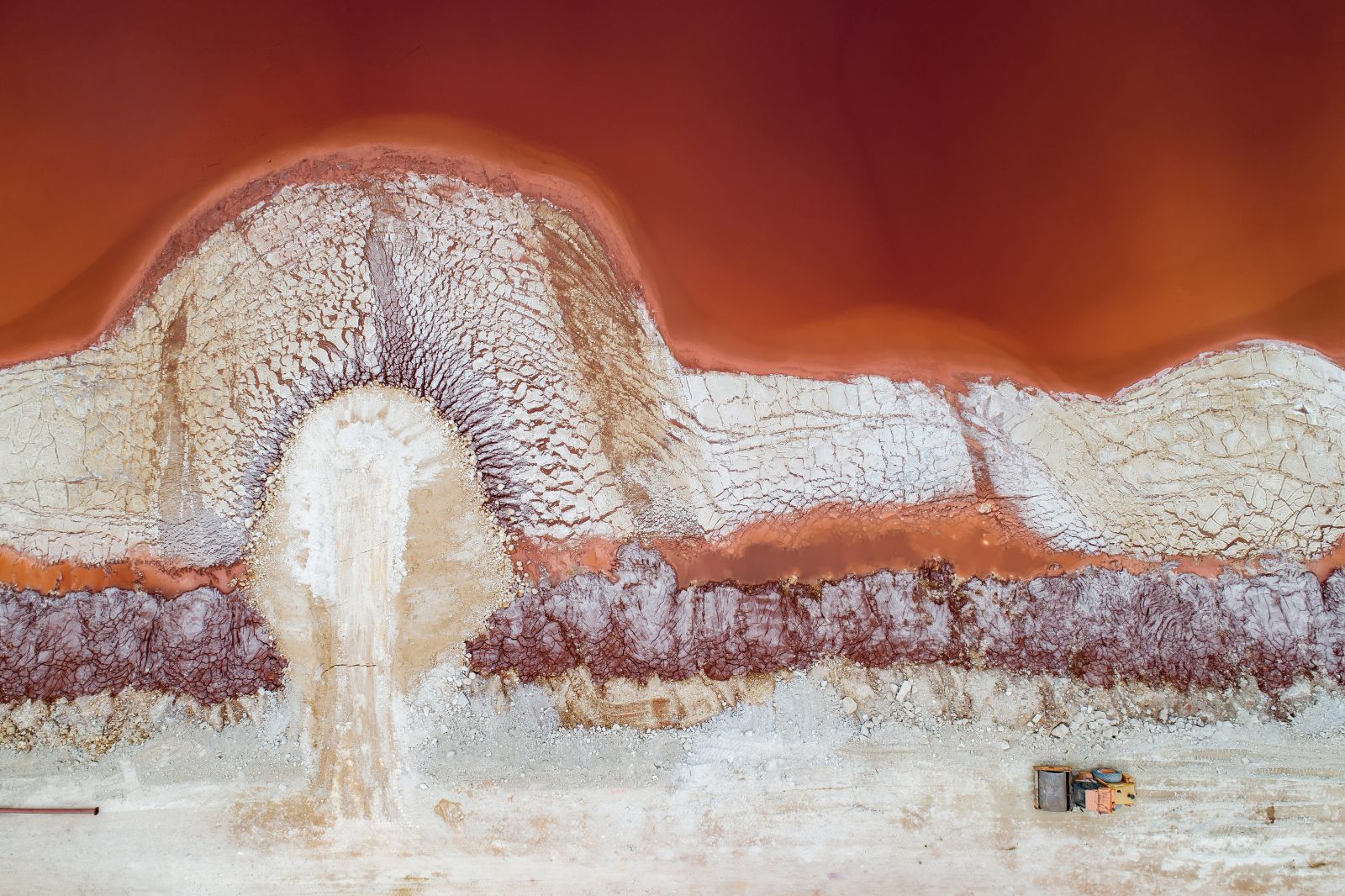
Red bauxite ore at facility for bulk materials delivered from the mine is maintained by cranes ready for processing alumina, than aluminium and iron. Gijon, Asturias, Spain, 2018.
Aluminium production facility located on seashore in Galicia, Northern Spain, Cervo near San Cibrao. 2018.
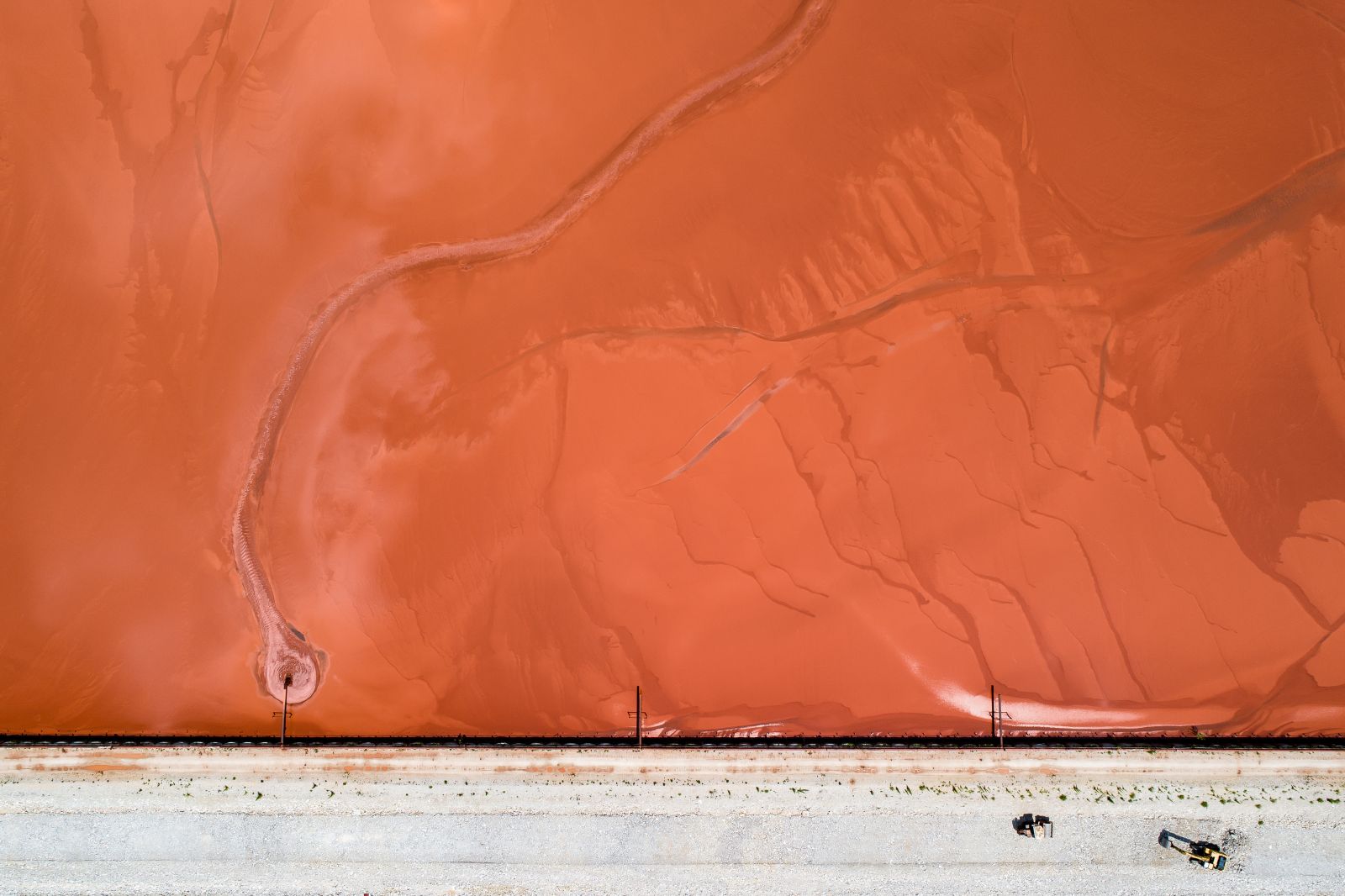
Huge pond for red mud deposits was developed in natural surrounding between two hills contaminating the groundwater and all nature in surrounding. On the third side dale was closed with huge dam. The sludge is transported through pipelines from the factory located 5 miles away. Bosnia and Herzegovina, 2019.
——————————
Annual production of alumina in 2018 was approximately 126 million tonnes resulting in the generation of over 160 million tonnes of bauxite tailings/residue.
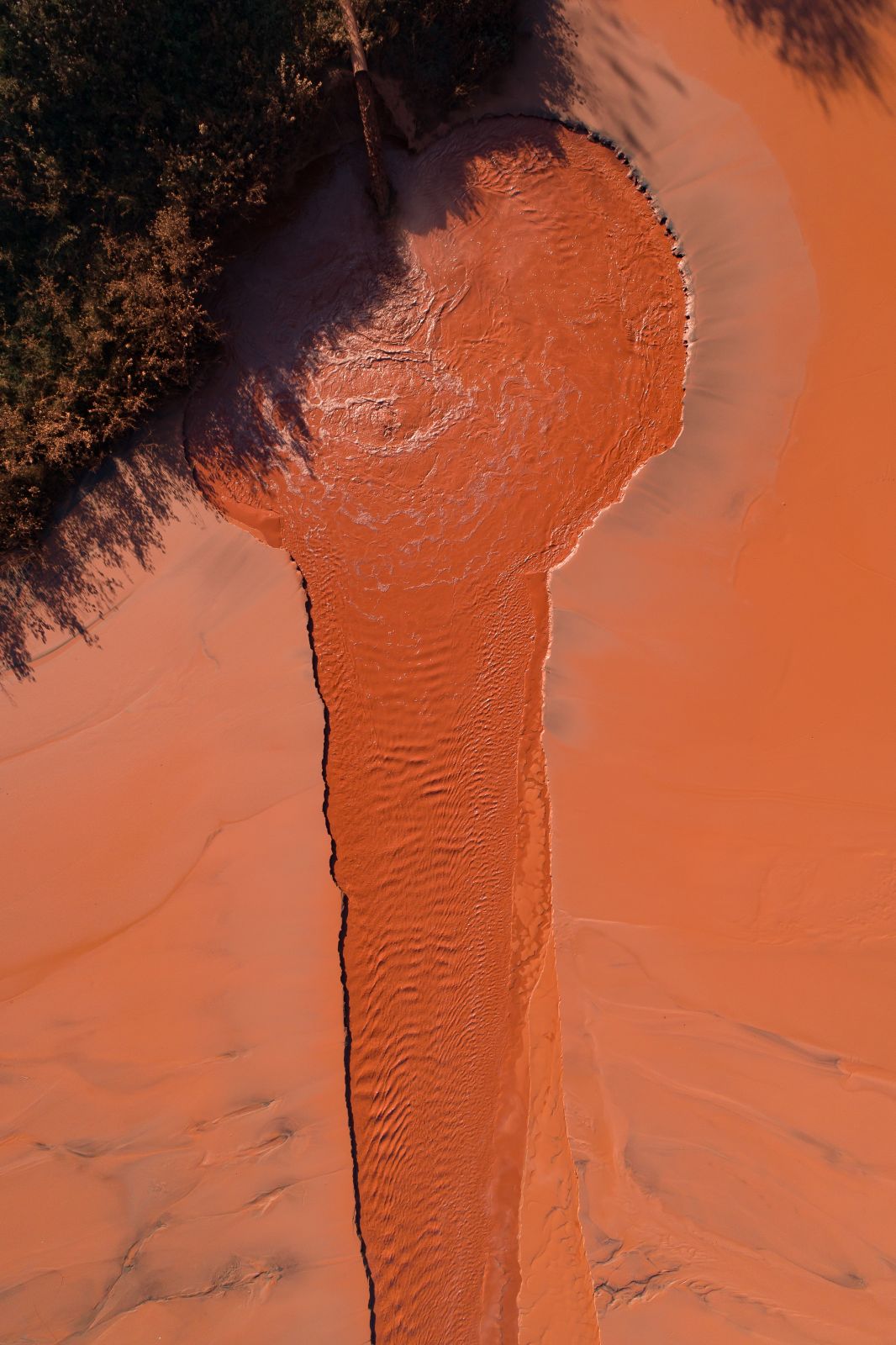
At aluminum oxide refineries, red mud bauxite waste pumped into vast storage impoundments cover the trees and it is allowed to settle. As locals says, the alumina rises almost 2 meters every year in the lake, contaminating the groundwater and vegetables grown in the house gardens located around pond are uneatable. In the windy weather air carrying contaminants and covering everything nearby. Bosnia and Herzegovina, 2019.
In order to prevent dangerous leaks, bulldozers work on weekends and holidays, shoring up the dam while red mud toxic waste material is pumped on to the upper surface of a massive waste impoundment in a water slurry coming from the factory located 5 miles away. The impoundments are essentially very large shallow lakes, engineered to de-water the slurry through evaporation. Bosnia and Herzegovina, 2019.
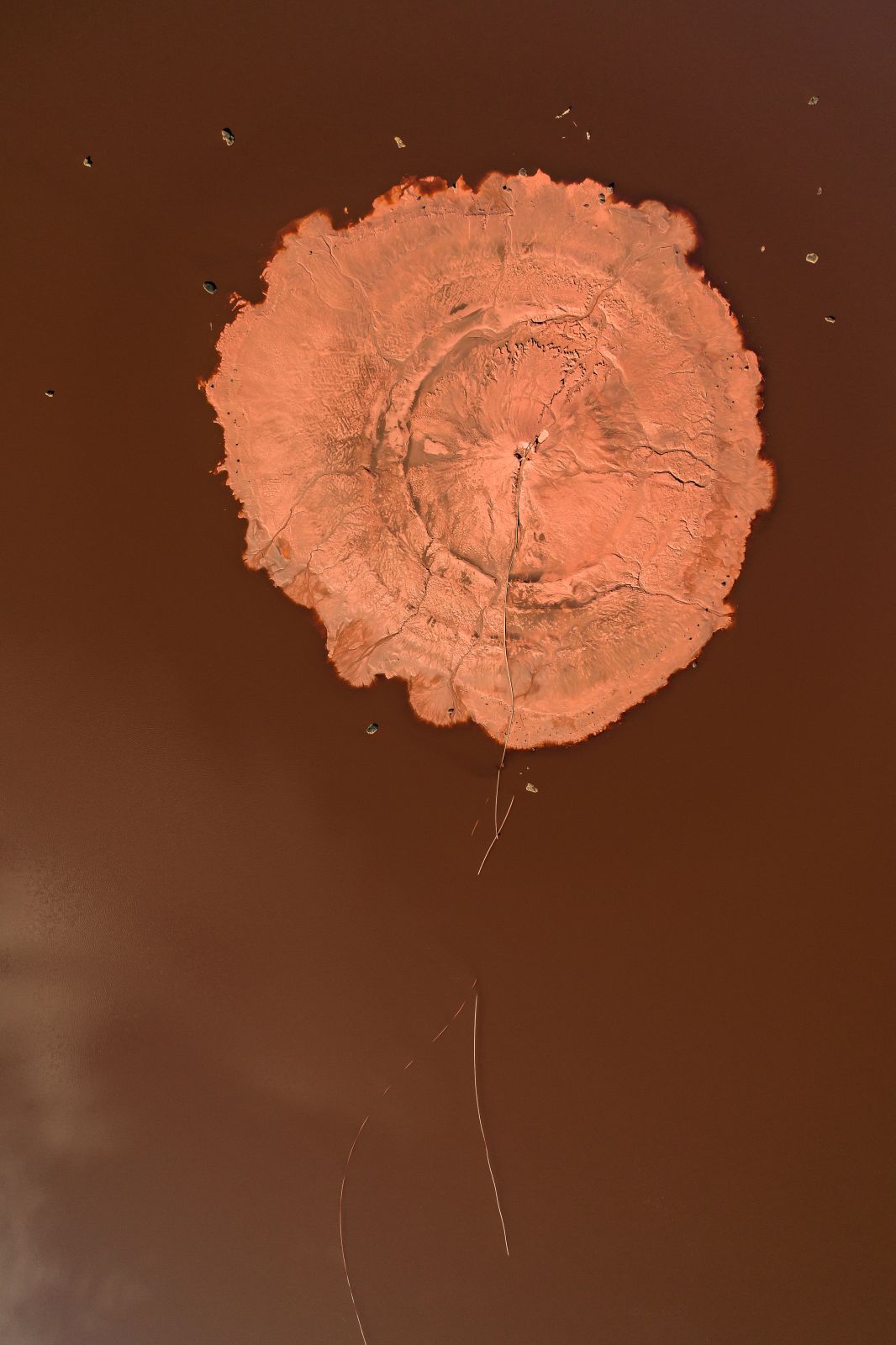
For the better utilization of disposal pond’s space pipes delivering red mud into the middle of huge impoundment. This process formed artificial island sized 120 meter in diameter. The impoundments are essentially very large shallow bowls, engineered to de-water the slurry through evaporation and an internal drainage system. This pond is located in huge wetland, former flooding area of River Elba. Germany, 2019.
The sludge or also known as alumina, is transported from the factory located 5 miles away through high pressure pipelines into the huge system of ponds for gradual neutralization and dry stacking. The impoundments are essentially very large shallow bowls, engineered to de-water the slurry through evaporation and an internal drainage system. Bosnia and Herzegovina, 2019.
Trucks deliver and pour dry residue into the huge pond while bulldozers shoring up the dam where toxic waste from aluminium production is stored in Galicia, Northern Spain, 2018.
Red mud storage facility located in valley between hills in south France, where trucks deliver dry residues from aluminium production. France, 2019.
Formerly used by Polish metal industry, now abandoned, parched pond full of crackings. The flora and fauna now starting the recover their place. Poland, 2019.
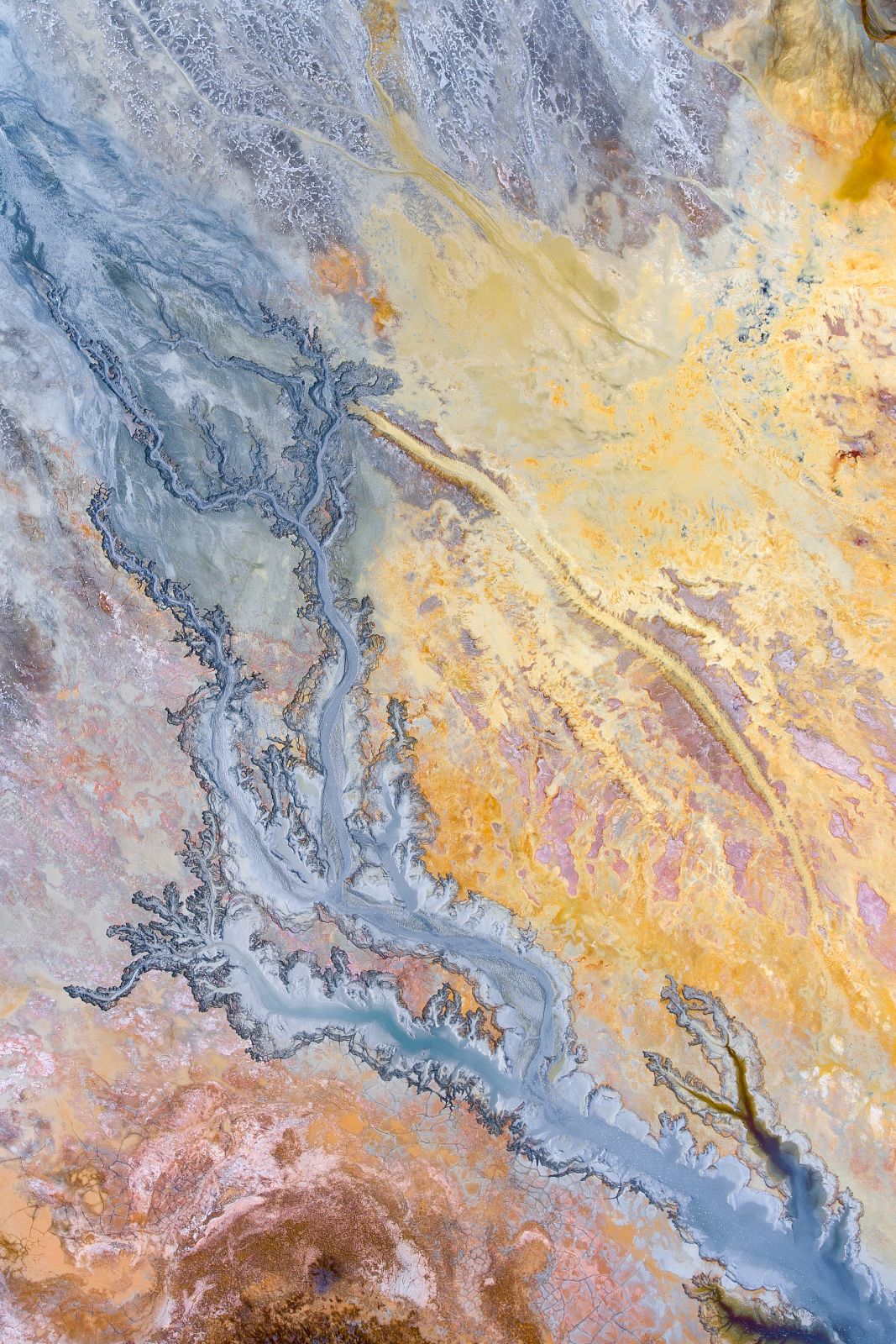
Normal sized tree covered with residue in the big waste decanting lake, tailing pond. Mining water and production by-products is discharged from Minas RioTinto due pyrite mining. Giant cracks was created during the dry stacking method. Orange color coming from sulfite and blue is reflection of the sky. Minas de Riotinto, Andalucia, Spain, 2019.
Visible width on picture is around 50 meter.
RioTinto minery is one of the world’s largest metals and mining corporations. In the past, it was mainly worked for copper and pyrite; presently the gossan is worked for gold. Mining seems to have begun during the Phoenician period, for the silver in jarosites. Thus, this mine is perhaps the oldest major mine in the world.
In one of the biggest European centers for recycling, the by-products of recycling production are collected in ponds and stored by dry stacking methods. On first sight scarry colors and textures, but this is one of the positive examples in our destructive behaviour, because facility in Lunen is now Europe’s largest waste management site, or as they declare on the website: the largest centre for industrial circular-flow economy in Europe. Lünen, Germany, 2018.
Visible width on picture is 26 meter.
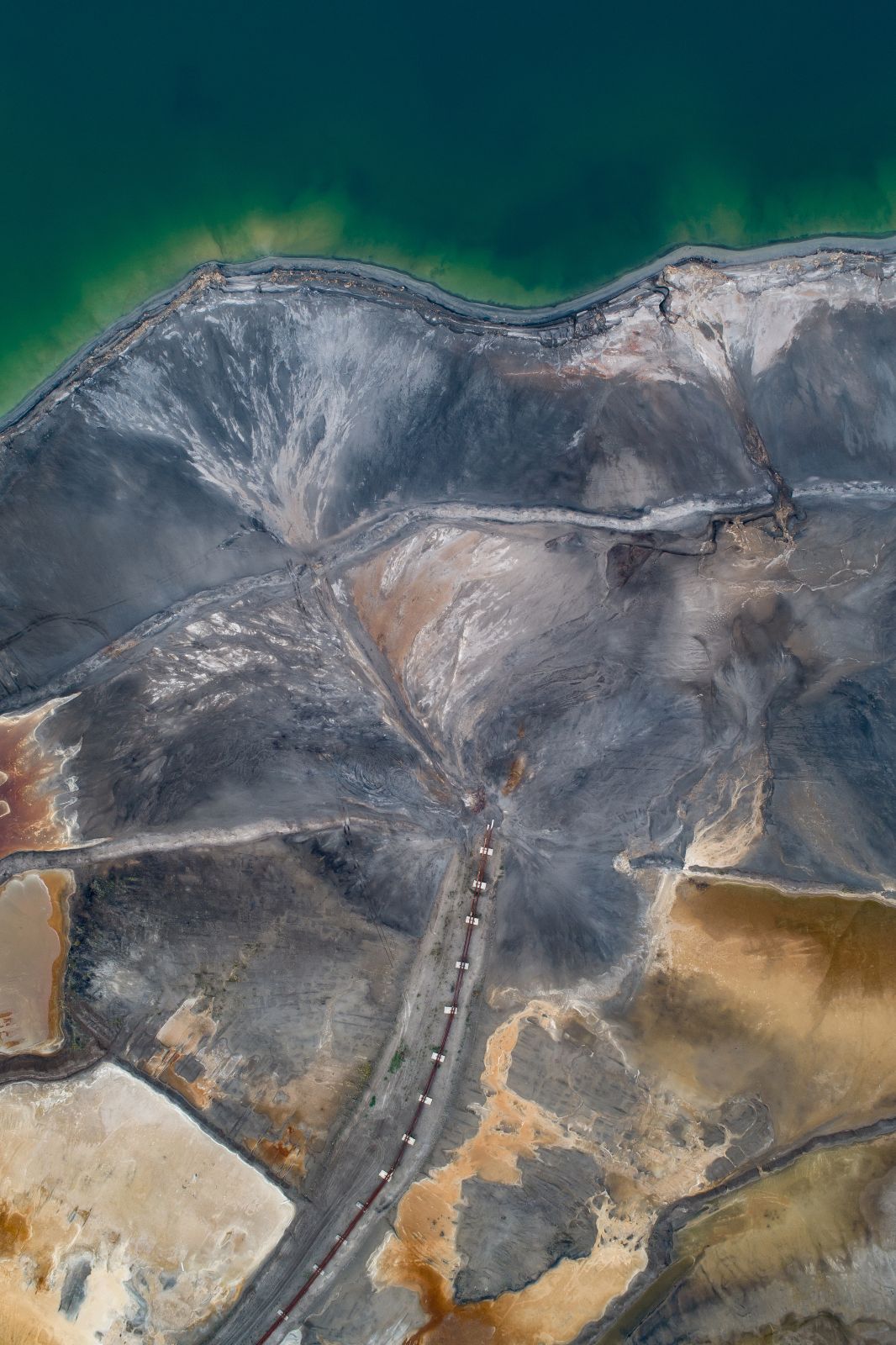
Textures at an abandoned pond used for the disposal and stacking of phosphogypsum with shallow, but highly toxic radioactive green water in Huelva, Southern Spain. 2018. This dam, used for storing industrial waste, contains 120 million tonnes of phosphogypsum, a by-product in the manufacture of phosphate-based fertilizers.
Visible width on picture is 196 meter.
Ash from thermal power plant after coal combustion in form of pulp is pumped through pipelines into the huge system of ponds for gradual neutralization and dry stacking. Poland, 2019.
Visible size from the top to the bottom of image is 332 meter.
During the process toxic and radioactive material leaking into the ground, evaporating, and finally neutralized material gets into the poison-green lake for long term storage.
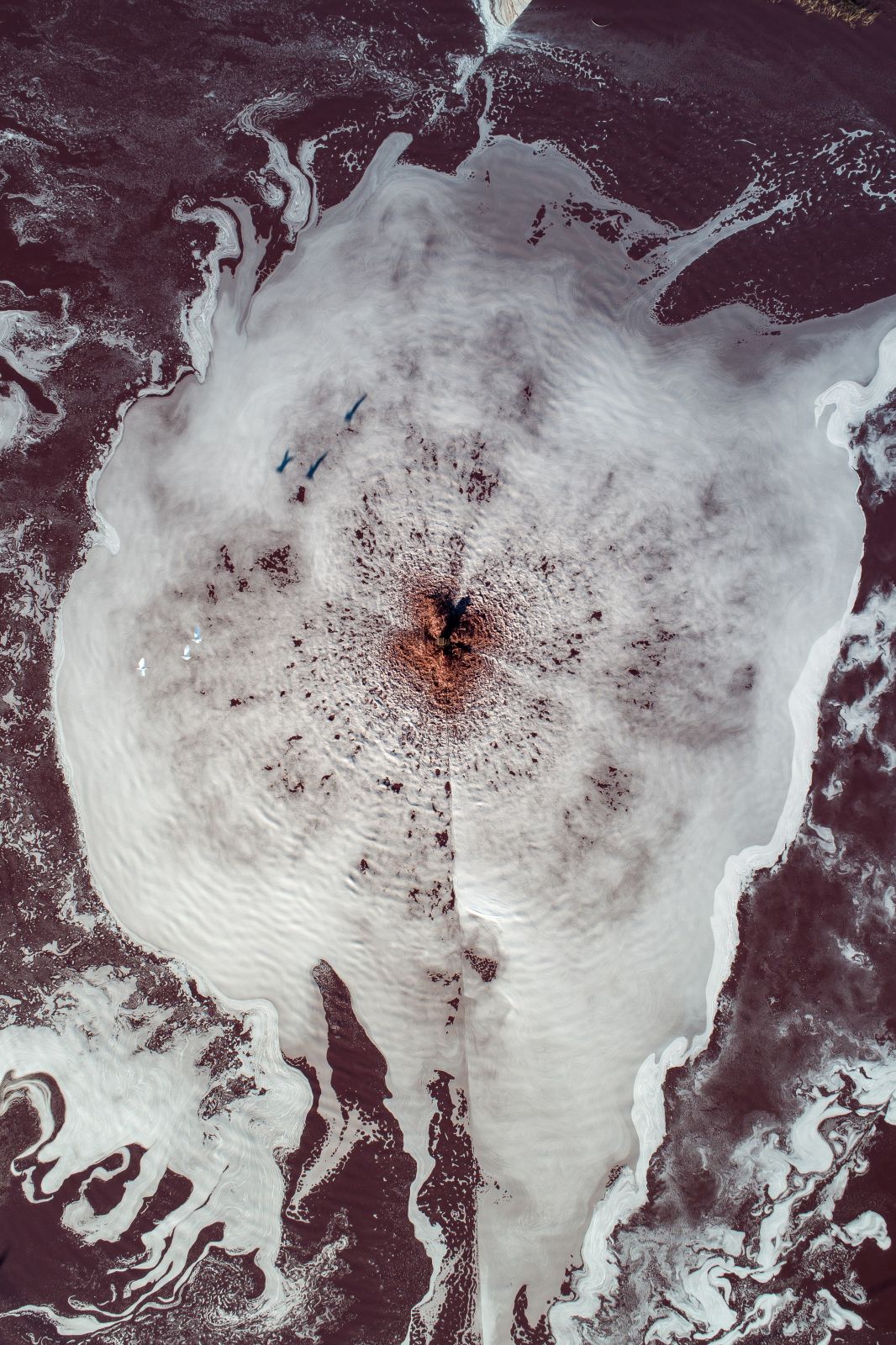
Three egrets swirling around the huge pond, where the waste from distillery is agitated by aerator producing stream and foam. Located in Provence, South France, 2019.
Visible size from the top to the bottom of image is 53 meter.
After coal combustion in thermal power station strongly alkaline mud, slag, dust-ash, gypsum and sulphur dioxide waste delivered by pipeline is mixed with chemicals for neutralization to be deposited by stacking method. During the process toxic material leaking into the ground and evaporating from the giant pond covering more 2 sq mile. Poland, 2019.
Visible size from the top to the bottom of image is 236 meter.
In the huge man-made ponds, built on flat area on the river bank, toxic substances which are by-products of soda industry are cover the trees. Constantly flowing residue is accumulated for neutralization, but on the way, hot toxic material evaporating by steam and leaking into the ground and to the river nearby. Bosnia and Herzegovina, 2019.
Visible size from the top to the bottom of image is 180 meter.
Residue of pyrite mining and processing flowing into the one the several huge lakes dedicated to deposit toxic waste creating abstract shapes. Minas de RioTinto, Spain, 2019.
Visible size from the top to the bottom of image is 86 meter.
Artistic shapes created by toxic by-products of titanium dioxide pigment production, collected in disposal lake for neutralization located in natural valley between two hulls in Slovenia, 2019.
Visible width on picture is 200 meter.
One of the largest chemical-processing companies in Slovenia oriented towards the production of titanium dioxide pigment, most widely used white pigment in products such as paints, coatings, plastics, paper, inks, fibres, and food and cosmetics because of its brightness. Factory also producing zinc anodes, printing inks, and industrial gypsum. By-product of these complex chemical processing is highly alkaline residue collected in disposal lake built between two hills in suburban area.
Waste and toxic by-products collected and maintained by dry stacking method in big pond of copper mining complex and hydrometallurgical process plant in Andalucia, Spain, 2019.
Visible width on picture is 244 meter.
The project site occupies 946 hectares including both the mine pit and the process plant. The expected annual production averages 72,000 tonnes of copper, equivalent to 25% of Spanish internal demand. The total for the entire 15-year operating period is estimated at 1 million tonnes of copper. Spain is the fourth largest consumer of copper in the European Union and ranks 14th in the world. Source by company’s website.
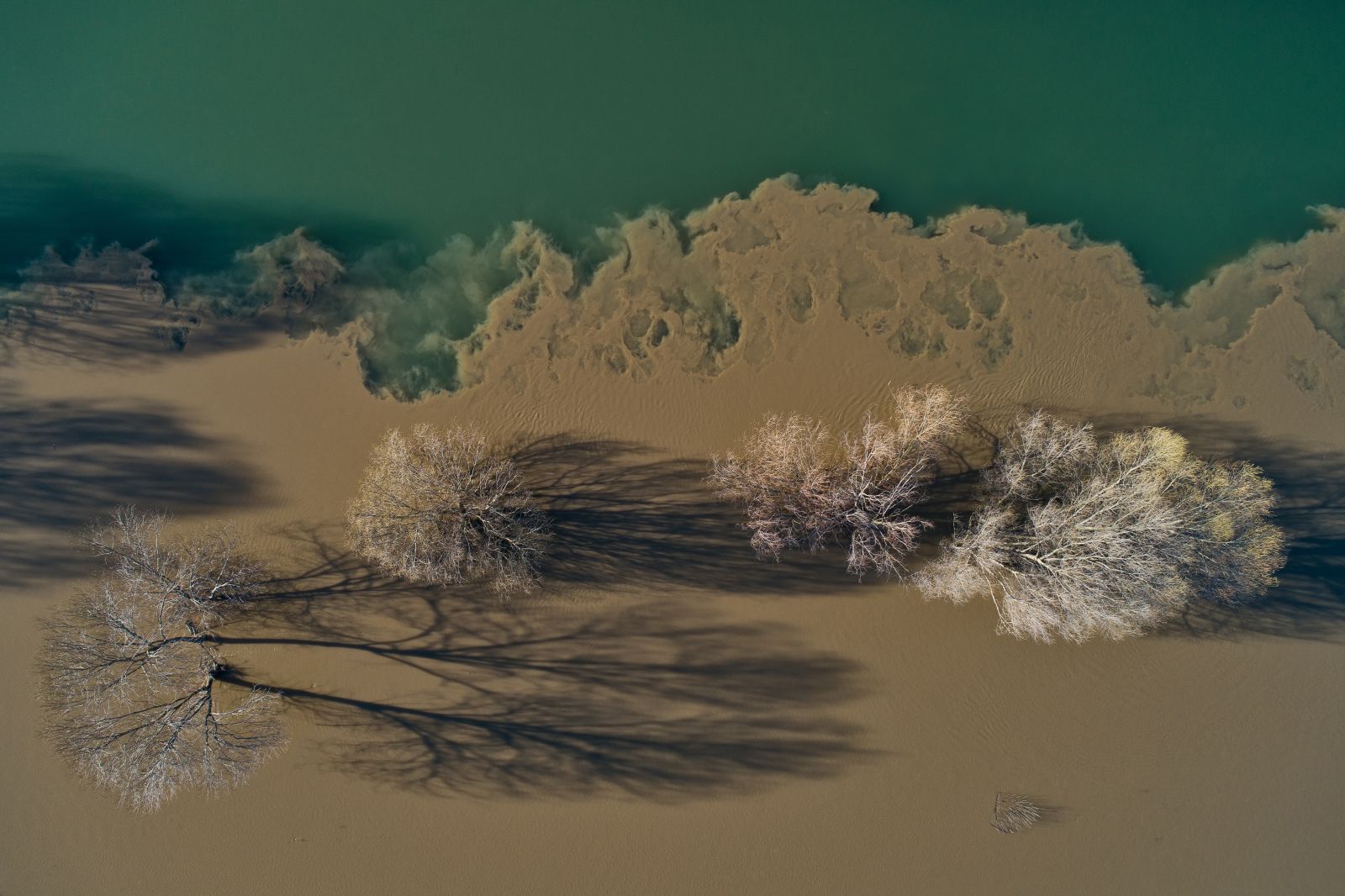
Mud flowing into the lake from channel used to equalization of water level. Balatonmária, Estuary of the West Belt-Channel, Lake Balaton, 2019.
In the period when the lake’s water level is high, to protect houses located on coast from flooding, water from the lake is drain into the channel. But opposite, when water is lowest in the biggest Central European lake, channel fill up the Balaton with water and also with the mud delivered from farmland in Somogy county. Seen from the air it shows the ways of actual streams in the lake.
In spring after harsh and long winter, in the period when the water level of Lake Balaton is high, to protect houses located on coast from flooding, water from lake is drain into the channel called Sio. When sio meets Kapos 50 miles away from the lake, they flooding on agricultural fields and we can see mixing of two water bodies.
The green coming from the lake, and Kapos deliver mud soaked from farmlands. Tolnanémedi, Hungary, 2018.
Danube, the biggest European river, last summer reached his lowest water level ever and reveal for the very first time own sandbeds along the areas of flowing where the river is wide and slow. Susek, Border between Croatia and Serbia, August 18, 2018.
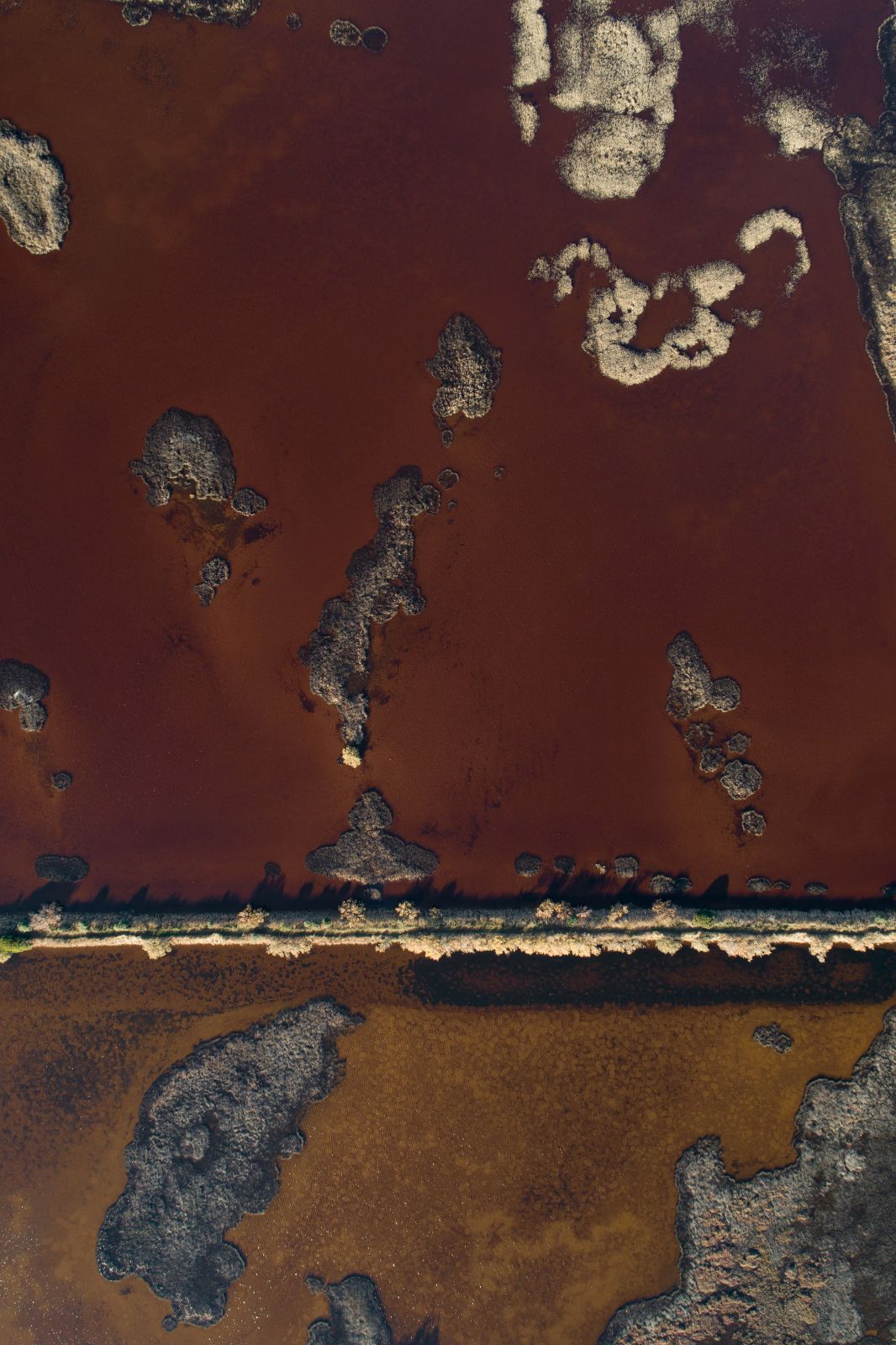
Marshland covered with water during the extremely high tide that flooded Venice Lagoon. Colors of lagoon, before and after human influence. Up is healthy marshland and active tidal water, bottom is dead ecosystem filled with water through dams. It is kind of forecast what will happen with the whole Venetian Lagoon if they built huge barriers. Venice, Lio Piccolo, November 18, 2019.
In November 2019 the Italian city, Venice experienced the worst flood since 1966, with the so called Acqua Alta (high water) reaching 1.84 meters above sea level. Due to climate change, and the unusual combination of spring tide, flooded rivers in the North and winds of more than 120 kmph from two different directions caused massive waves to crash into the historical city protected by UNESCO.
Lagoon suffers flooding on a yearly basis, but in recent years exceptionally high tides have become more common. After the record breaking flood in November, another huge one came right before Christmas, 24th December 2019.
Water driven by tidal movement passing through Oosterschelde, the eastern scheldt storm surge barrier designed to protect the Netherlands from flooding. Vrouwenpolder, The Netherlands, 2019.
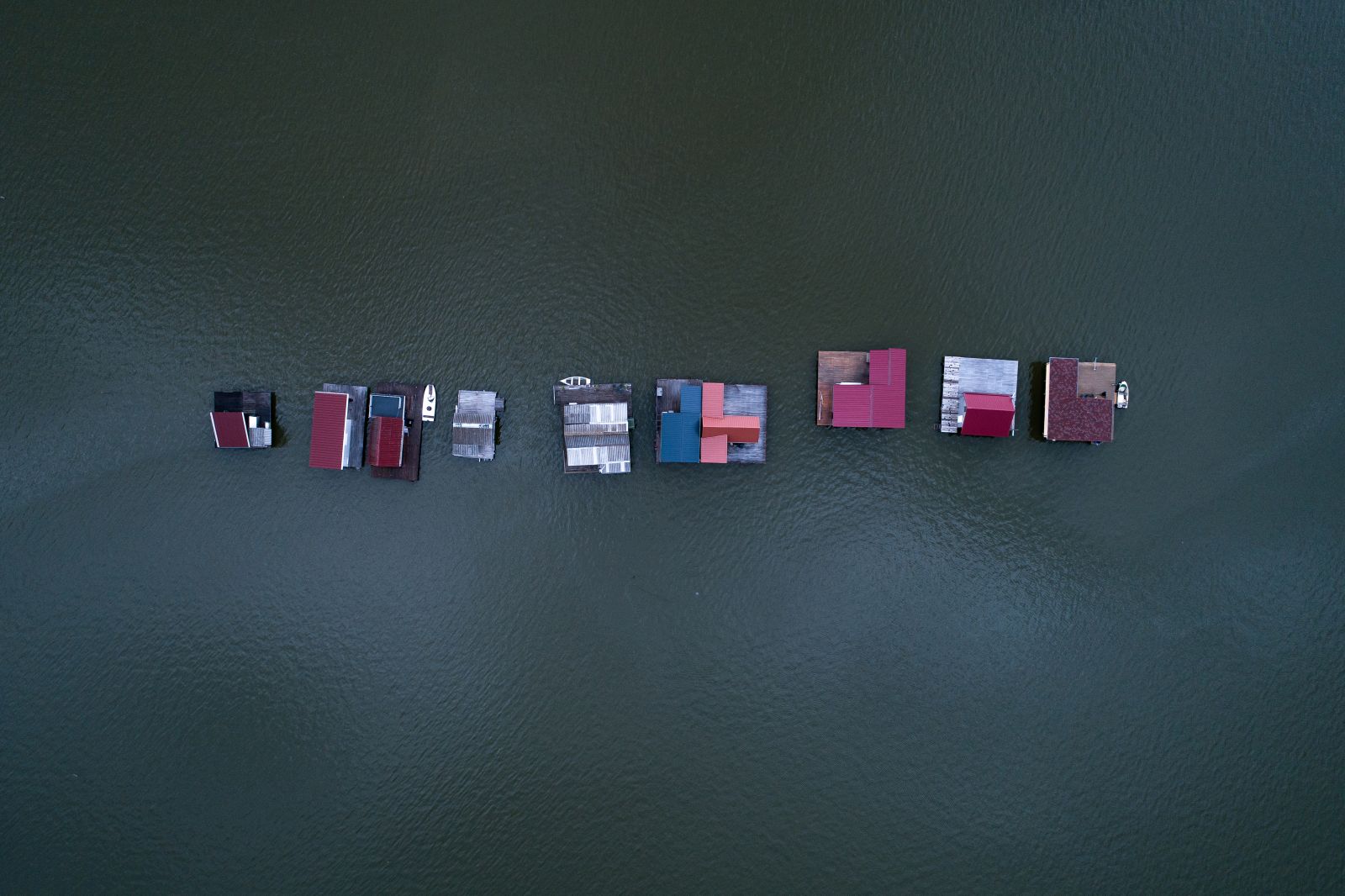
Fisherman houses on the middle of the Bokodi lake near Oroszlany city, seen just before the heavy summer storm which is reflecting on the rippling lake. Bokod, 2019.
Artificial lake near power plant used as storage of cooling water. Thanks to the hot water this lake never freeze, that’s why fishermans like this place to live to their hobbies all year round.
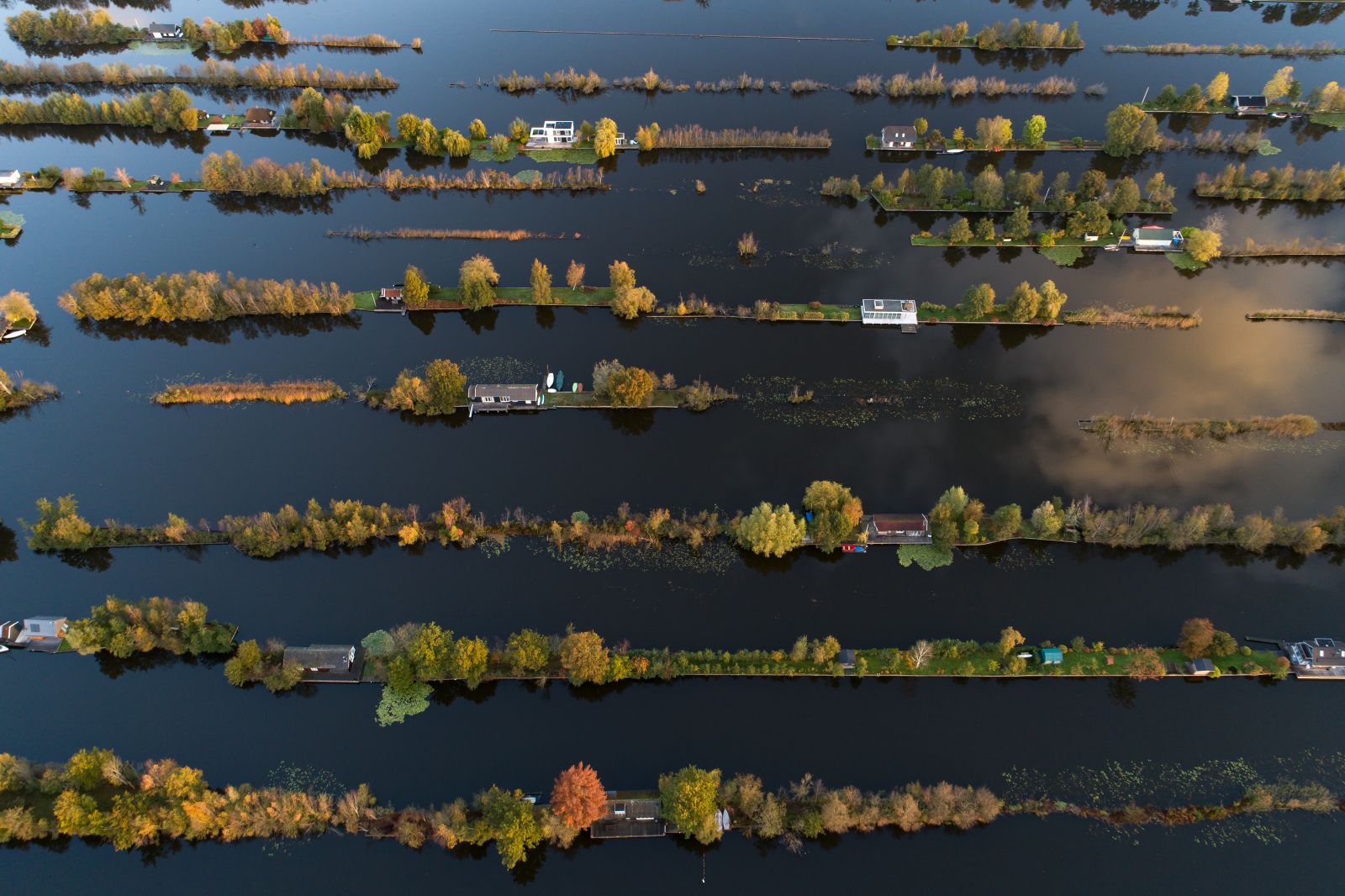
Narrow elongated ribbed sand islands dotted with holiday houses along embankments with yachting marinas seen in blazing autumn colors. Loosdrecht Lakes, The Netherlands, 2019.
Originally the Loosdrecht Lakes were a peat area that was too soggy for agricultural purposes. To drain the area, ditches were dug to the way of Utrecht. The peat bog that emerged was dry enough to be used as a pasture area.
Not everyone obeyed the rules for peat extraction. The narrow layers were dug away or they were swept away by the waves in stormy weather and gradually the puddles grew to the current size. In the 20th century, a large recreational area was created by the rise of water sports.
Farmers staying in the boat collecting the oysters under the frames in the bay. Nearly half of France’s oyster production comes from the Etang de Thau lagoon, and Bouzigues city is the capital of Oysters production in France. Marseillan, 2019.
Thau lagoon is an unique marine natural environment in Europe. To protect this sensitive area, leisure activities are regulated. As this lagoon does not have tides, it was necessary to use a special technique: suspended culture, carried out using ‘tables’ made of rails supporting ties and crossed poles.
Boat pumping the feed stuff through the pipelines into the geometrically spreaded huge net-baskets full of fish. Dugi Otok, Croatia, 2019.
The strange, ovoid enclosures appear like abstract geometric designs, hardly related to the thriving ecosystems of fish that lay just below the surface. Aquaculture is seen by many as a more efficient way to safely breed larger volumes of fish instead of harvesting wild populations, but concerns about the environmental impact near farming sites have raised a lot of questions. They are often criticised for polluting the environment — from antibiotics, discarded nutrients and faeces that settle on the seabed — impacting biodiversity and spreading disease.
Series of pools for fish farming on the seashore of industrial city of Piombino, located on the west coast of Italy. Piombino, 2019.
Farm is located near huge steel plant which deposits highly alkaline residues just beside the fish farm. This raised many dialogue about healthy farming, but today the topic is over, because factory stopped the operation.
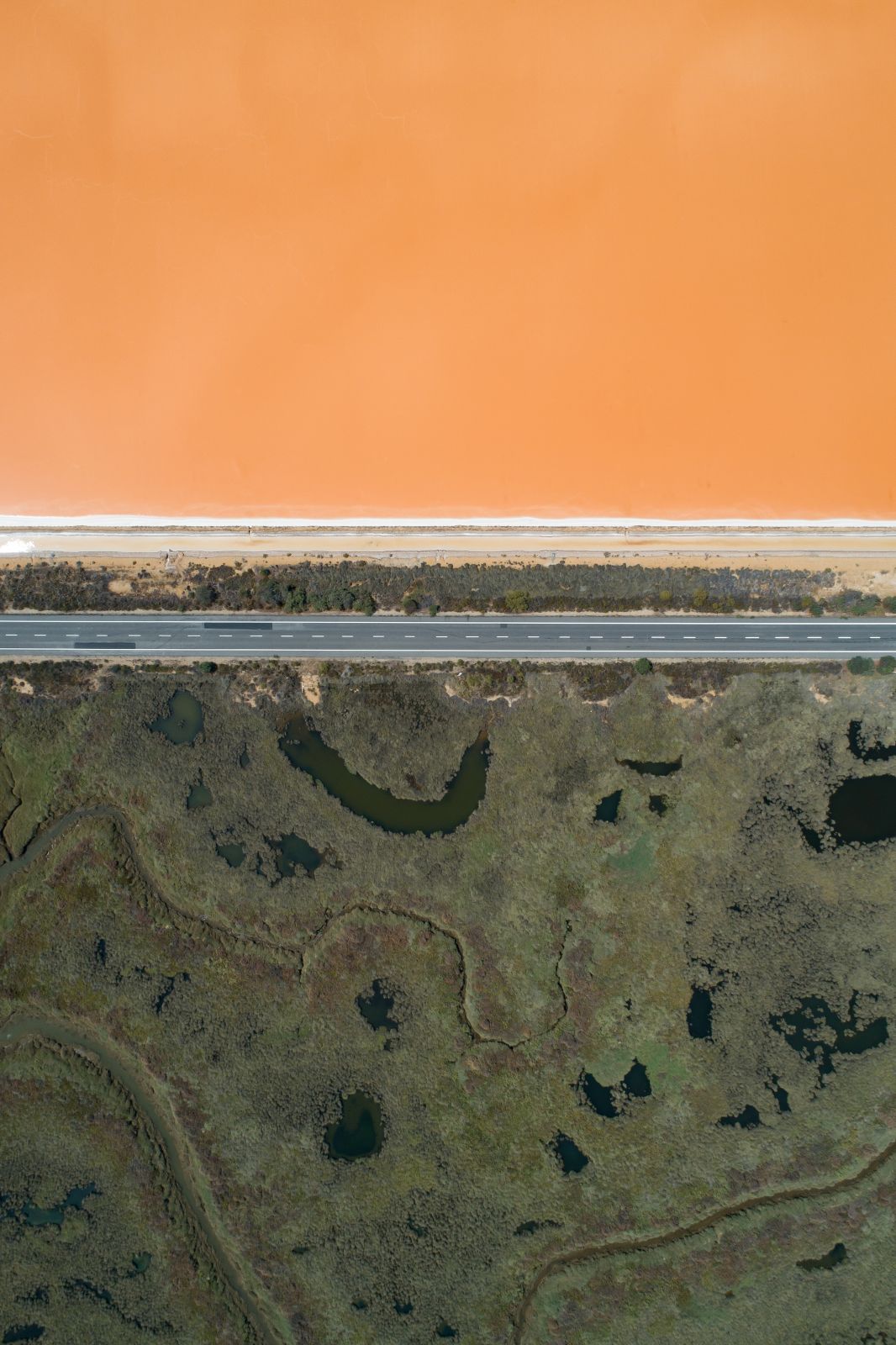
Service road crossing evaporation salt ponds. On the top of the frame is the crystallized uncollected salt after natural evaporation during the summer, bottom is the highly saturated brine by special algae which is formed in this ponds and saturation indicates high salinity. Saline du Midi, Aigues Mortes, southern France, 2018.
The extraction of salt from the sea water is one of the oldest forms of human impact in natural spaces in general. Salt is extracted in lagoons, from the water through a lengthy process. Over a few months, the brines evaporate, concentrate, before they are collected as pure salt crystals, used mainly for defrosting winter roads and in the plastic, pharmaceutical and leather processing industry. The saturated colors vary from lighter shades of green, orange, vibrant red or harsh pink. It depends on local characteristics of soil, mud, water and microbiology.
During the work I have visited 22 different salinas in Croatia, Slovenia, Italy, France, Spain and Portugal and I was inspired by Mark Rothko’s philosophy. In the same time I explore the diversity of nature, human influence, but also I searched for the sense of place as space of spiritual journey can be entered, as if Mark did.
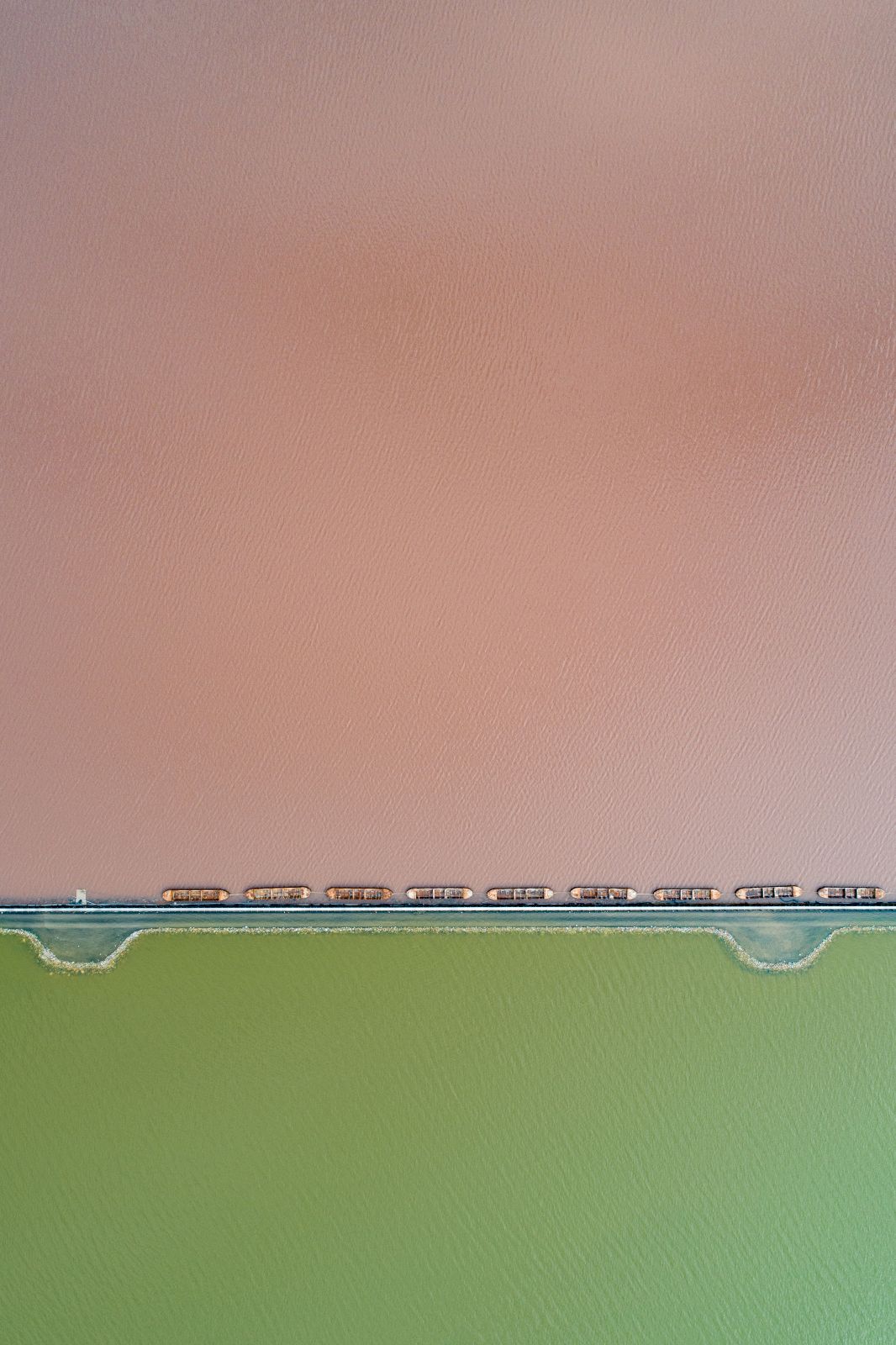
Pink and green colored salt pond, crossed by small rails for automatic moving boat-wagons. During the salt harvesting they deliver salt to the processing facility from the middle of the lake where the salt precipitates in the shallow part of lake during the hot, sunny summer days. Salinas De Torrevieja, Alicante, Spain, 2019.
The extraction of salt from the sea water is one of the oldest forms of human impact in natural spaces in general. Salt is extracted in lagoons, from the water through a lengthy process. Over a few months, the brines evaporate, concentrate, before they are collected as pure salt crystals, used mainly for defrosting winter roads and in the plastic, pharmaceutical and leather processing industry. The saturated colors vary from lighter shades of green, orange, vibrant red or harsh pink. It depends on local characteristics of soil, mud, water and microbiology.
During the work I have visited 22 different salinas in Croatia, Slovenia, Italy, France, Spain and Portugal and I was inspired by Mark Rothko’s philosophy. In the same time I explore the diversity of nature, human influence, but also I searched for the sense of place as space of spiritual journey can be entered, as if Mark did.
Grass is spreading in abandoned salt ponds near Vic-la-Gardiole, southern France. Salt was important for rulers in the 15th century for conservation of food during the long exploring journeys searching for the new continents. Than salt means power for the ruler, and every king transformed lagoons into the salt ponds. Nowadays we don’t need this enormous quantity of salt, and ponds are transformed into the farmlands, natural sites, but some of them are abandoned. Vic-la-Gardiole, southern France, 2019.
During the work I have visited 22 different salinas in Croatia, Slovenia, Italy, France, Spain and Portugal and I was inspired by Mark Rothko’s philosophy. In the same time I explore the diversity of nature, human influence, but also I searched for the sense of place as space of spiritual journey can be entered, as if Mark did.
Two different ponds with different level of salinity seen in winter time. Flamingos take off from the salt pond with normal level of salinity where they usually feed because it is full of nutrients and shrimps. However in the saturated lakes is unlivable for any kind of creature due to high concentration of salt. Salinas de la Tap y Marivélez, Cadíz, Spain., 2019.
Road crossing the area with highly saturated salt, located beside marshland, tidal area of Odiel River, opposite of Huelva downtown. Salinas del Odiel, Huelva, Andalucia, Spain, 2018.
The extraction of salt from the sea water is one of the oldest forms of human impact in natural spaces in general. Salt is extracted in lagoons, from the water through a lengthy process. Over a few months, the brines evaporate, concentrate, before they are collected as pure salt crystals, used mainly for defrosting winter roads and in the plastic, pharmaceutical and leather processing industry. The saturated colors vary from lighter shades of green, orange, vibrant red or harsh pink. It depends on local characteristics of soil, mud, water and microbiology.
During the work I have visited 22 different salinas in Croatia, Slovenia, Italy, France, Spain and Portugal and I was inspired by Mark Rothko’s philosophy. In the same time I explore the diversity of nature, human influence, but also I searched for the sense of place as space of spiritual journey can be entered, as if Mark did.
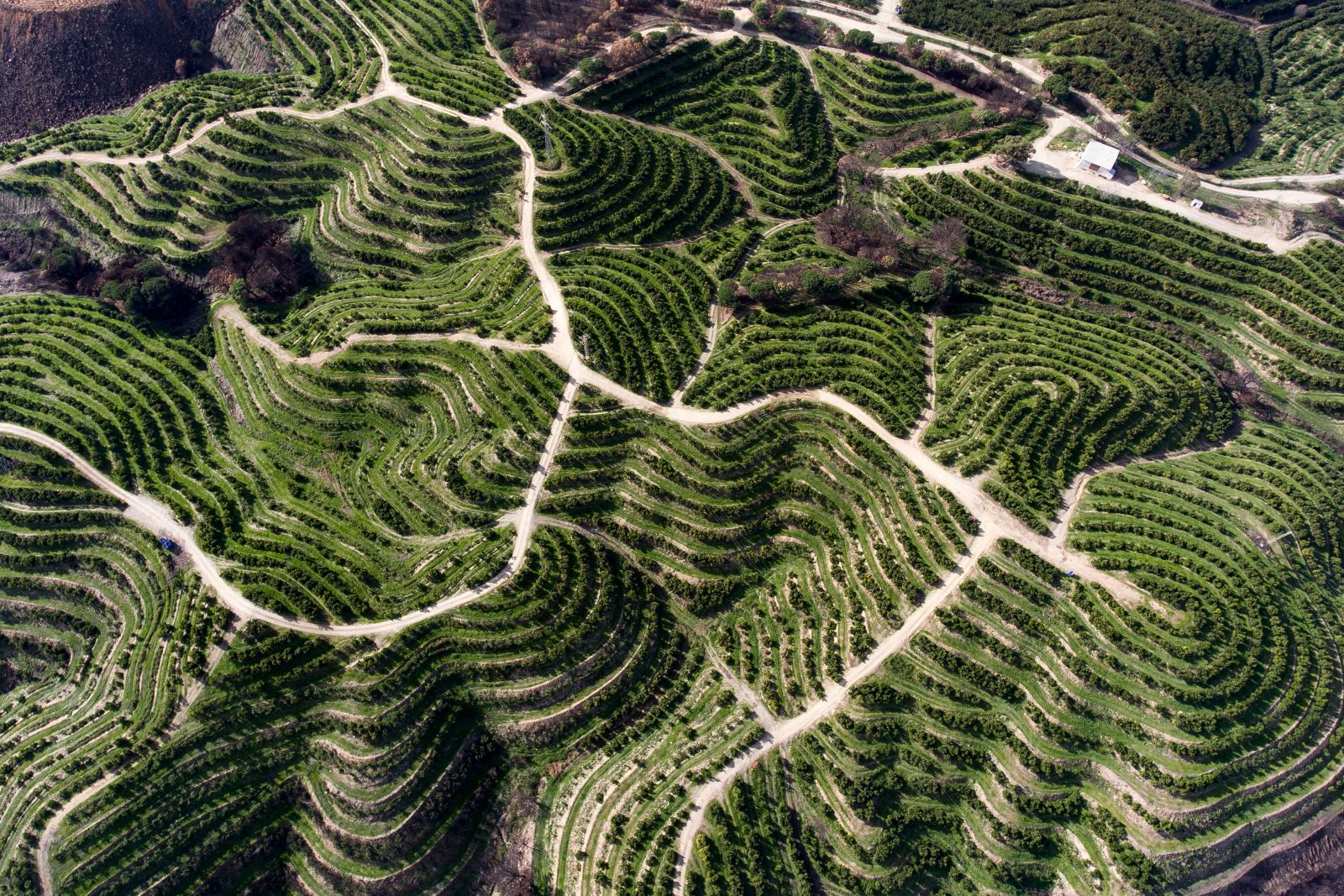
Spanish orange plantations. Because orange needs hor sun and plenty of water to grow, farmers in sunny Andalucia have devised a system of hill-terracing and cut irrigation channels to every stair on hill slopes which are fed by powerful water pumps from the surrounded lakes. And this create really interesting forms on the hill sides, almost like human fingerprints on the landscape. Andalucia, 2019.
Water reservoir and irrigation pipelines on the farmland prepared for the crops growth in the hot and dry summer season depicting struggle for the water in southern regions of Spain. Cartagena, Murcia, Spain, 2019.
Struggle for water. Water reservoir with water for irrigation of farmlands during the hot and dry summer months was collected during the winter time. Ot top right we can witnessing small crack made on farmland by heavy raining during the winter. Andalucia, near Seville, 2018.
In Almeria, Spain is the The largest concentration of greenhouses in the world. The crops grown in this giant are produced by a mix of small individual farmers and larger multinationals whose fruits and vegetables fill the produce sections of supermarkets. More than half of the Europe’s demand for fresh fruits and vegetables are grown under the plastic shades but place causing big environmental and social problems also.
Almeria, Spain, 2019.
While temperatures in the rest of Spain have climbed at rates above the world average, meteorological observatories located in the so-called sea of plastic have shown them moving in the opposite direction, with a decline of 0.3 degrees per decade. The strange phenomenon had not gone unnoticed in scientific circles, and now a study has suggested a plausible explanation: the white colour of the plastic reflects sunlight into the atmosphere as if it were a mirror, and it slows the warming of the surface. In this way, the greenhouses at a local level offset the rising temperatures associated with global warming.
Second problem is migration. Labor shortages attract migrants to come from Africa, just opposite the coast, from the other side of Mediterranean sea.
Abandoned ranch on ripe sunflower field crossed with traces of late streams near Jerez.
Andalucia, Spain, 2018.
The whole year is quite hot in Andalucia, especially in Jerez county. There we are witnessing
how water disappear year after year. Arroyo del Gatto was flowing here decades ago, provide
the life to the territory, now there is only the dry traces, the deserted ranch and the ripe sunflowers.
 facebook
 instagram
 hírlevél feliratkozás